
Beginner Bible Study
What to Study in the Bible When You Don’t Know Where to Start
When the Bible feels too big to begin, start with a clear question, a manageable section, and one honest observation.
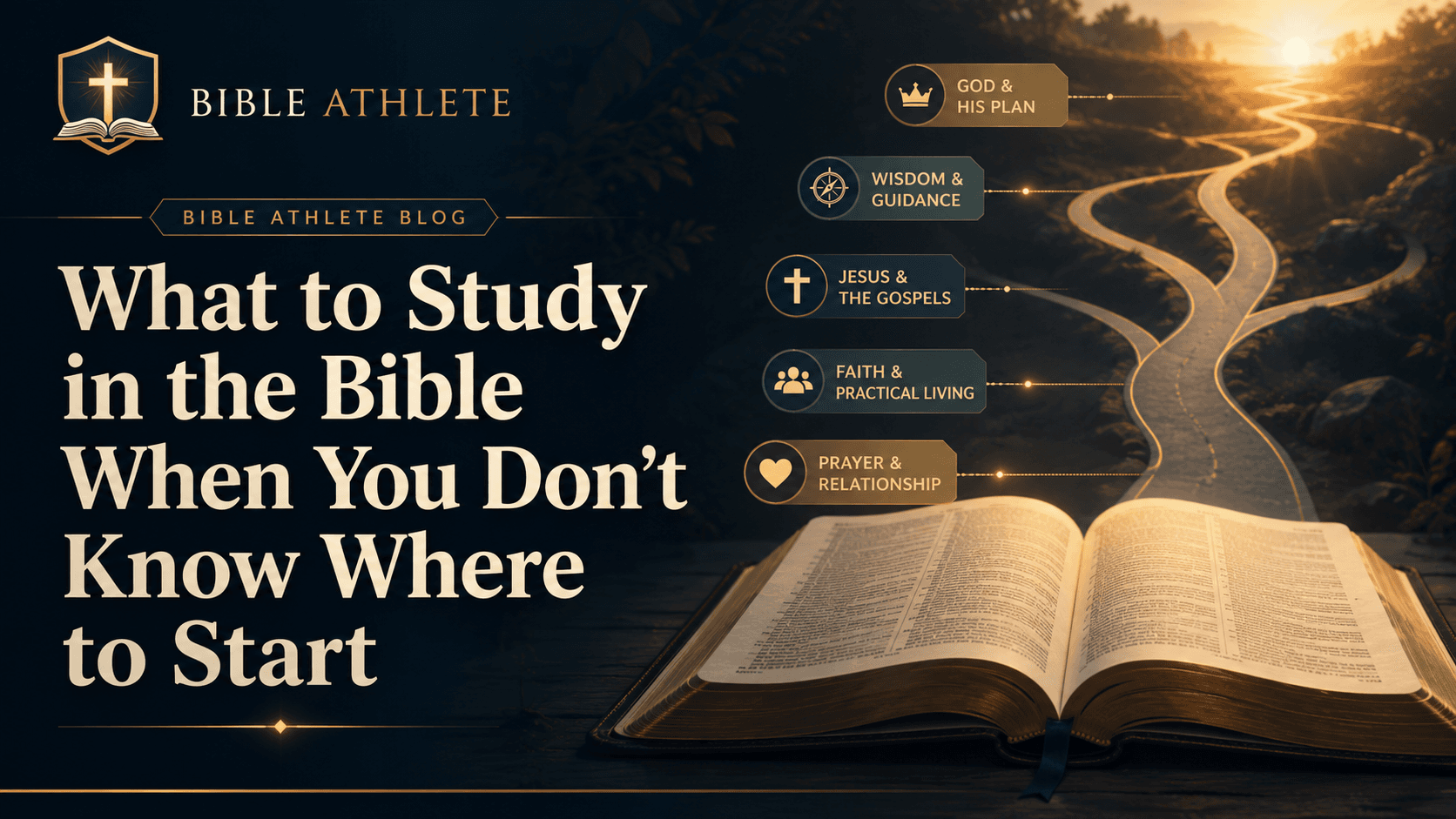
Begin with a clear question
When you do not know where to start, do not begin by trying to solve the whole Bible at once. Begin with one question you can bring to a passage.
Your question can be simple: What is happening here? What does this passage show about God? What choice is being made? What would I need to remember if I explained this to someone else?
Choose a manageable section
A whole book may be too much for one sitting. A single verse may be too small to understand well. Look for a natural paragraph, story scene, speech, psalm, or teaching unit.
Narrative books can be helpful for many beginners because people, places, conflict, and sequence are easier to follow. That does not make one starting book the only right choice. It simply means story can give you handles when you are learning how to observe.
A starter study pattern
- 1Read the section onceNotice the basic scene or argument without stopping every few words.
- 2Read it again with a pencilMark repeated words, people, places, commands, contrasts, or questions.
- 3Write one sentenceSummarize what the section is mainly doing before moving on.
Read context rather than isolated verses
A verse can be true and still be misunderstood when it is removed from its setting. Context asks what comes before, what comes after, who is speaking, and what problem or moment the passage belongs to.
You do not need a seminary library to begin. Read the headings around the passage if your Bible includes them. Notice the book name. Notice whether you are reading narrative, poetry, law, wisdom, gospel, letter, or prophecy.
Write observations before applications
Application matters, but observation comes first. If you rush immediately to “what does this mean for me,” you may miss what the text actually says.
- Who is present?
- What happens or what is being taught?
- What words or ideas repeat?
- What surprises you?
- What question would you ask next?
Use questions to check understanding
After reading, close the Bible for a moment and ask yourself what you remember. Name the main person, the main event, and the main point. If you cannot answer, that is useful information, not failure.
Questions reveal what stuck and what needs another look. This is one reason Bible Athlete uses a question-based Training Day: questions help turn reading into attention, recall, and review.
If you are still unsure where to begin, choose one Gospel scene, one psalm, or one narrative chapter and practice the same pattern for a week. Familiarity grows when the method stays simple.
The important thing is to keep the first session concrete. A small passage studied carefully will serve you better than a large plan you abandon.
Keep training
Related Bible study guides
.png&w=3840&q=75)
Beginner Bible Study
A Simple 5-Minute Bible Routine for Beginners
Five focused minutes can give beginners a clear starting rhythm without pretending that short study is the only meaningful way to meet Scripture.
Beginner Bible Study
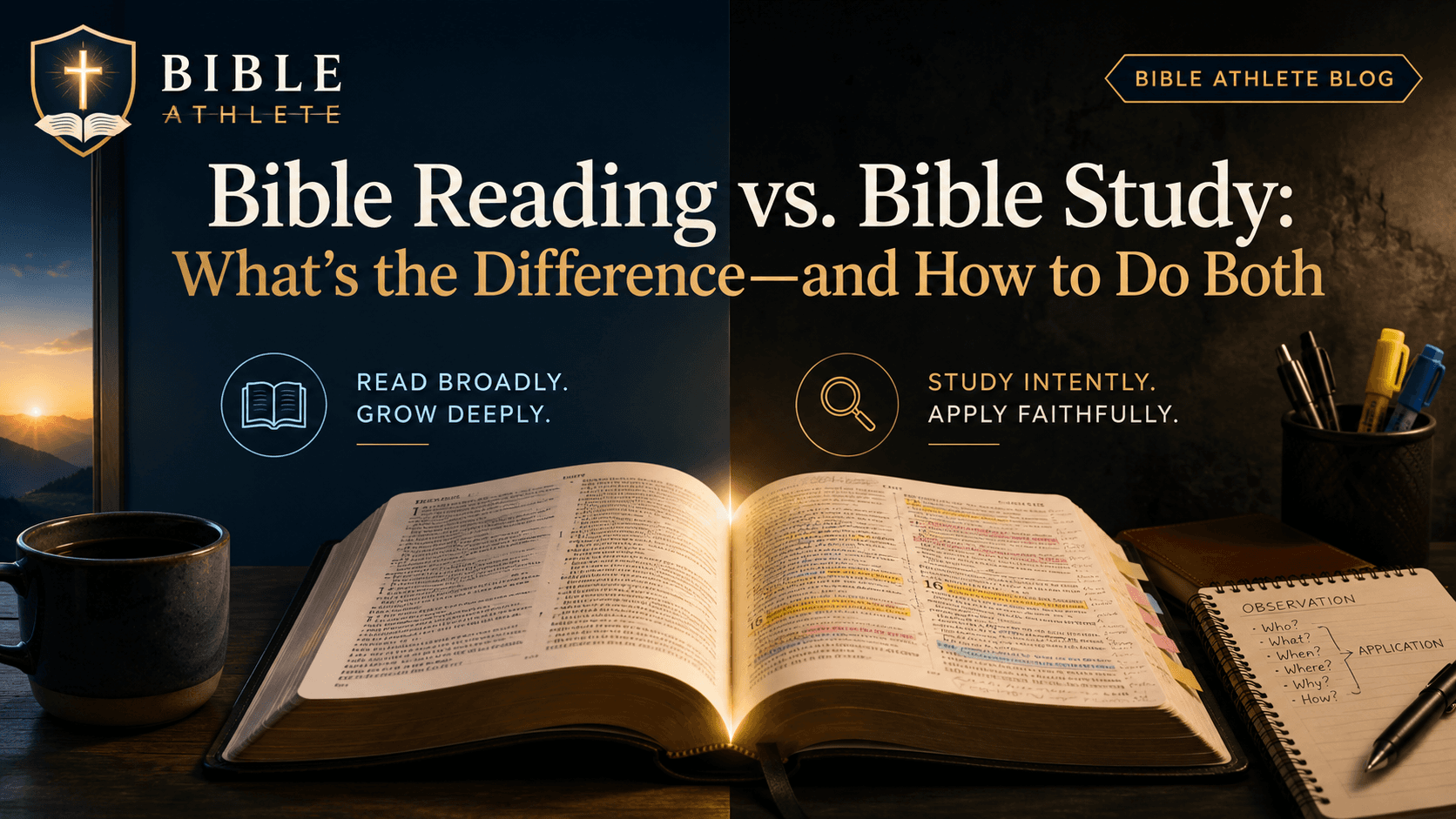
Bible Reading vs. Bible Study: What’s the Difference—and How to Do Both
Bible reading and Bible study are not rivals. One helps you move broadly through Scripture, and the other helps you slow down with focused attention.
Scripture Memory
Why You Forget What You Read in the Bible—and How to Remember More
Forgetting what you read is common. Question-based recall can help you notice what stuck and what needs another look.