
Progress and Motivation
How to Stop Starting and Quitting Bible Reading Plans
If you keep beginning Bible reading plans and losing momentum, the answer may be a smaller plan, a kinder restart, and more active engagement.

Why Bible reading plans often collapse
Many Bible reading plans begin with sincere desire and then meet an ordinary week. A late night, a sick child, a hard commute, or one missed morning can make the whole plan feel broken.
The problem is not always laziness. Sometimes the plan is too ambitious for the life you actually have, or it gives you no graceful way to return after interruption.
Restart without shame
Shame makes one missed day heavier than it needs to be. It whispers that if you fell behind, you might as well wait for a cleaner Monday.
Instead, restart with the next small passage. You do not need a dramatic speech to yourself. Open the Bible, read a manageable section, and continue.
Set a minimum daily commitment
A minimum commitment is the smallest version of the habit that still counts. It might be one paragraph, one psalm section, or one five-minute routine.
The minimum is not meant to keep you small forever. It protects continuity on difficult days so longer study can grow from something real.
Replace catch-up pressure with a return plan
- 1Do not read five missed days at once by defaultCatch-up marathons can be useful sometimes, but they often turn Scripture into debt.
- 2Read the next assigned sectionIf your plan allows it, simply move forward and let the rhythm recover.
- 3Track returns, not only streaksMark the days you came back. Returning is a real consistency skill.
Engage actively so the plan feels alive
A reading plan can become a checkbox if you never ask what you noticed. Active engagement gives each session a reason to matter.
After reading, ask one recall question: Who was present? What happened? What command appeared? What did I learn about God, people, or the next faithful response?
This kind of engagement can make even a short reading plan feel less mechanical. You are not only finishing a box; you are listening for details you can carry into the day.
If attention is thin, shorten the section before abandoning the plan. A smaller section with a clear question often restores momentum better than a larger section read in a fog.
Keep the plan going after the restart
At the end of each week, review gently. Which time worked? Which section was too long? Which day needs a smaller plan? Adjust one thing instead of rebuilding everything.
You may also need to change the plan source. A calendar plan can be helpful, but it is not holy in itself. If it keeps burying you, choose a slower path through the same book.
The goal is not to become a person who never misses. The goal is to become a person who knows how to return.
Keep training
Related Bible study guides
Bible Study Habits
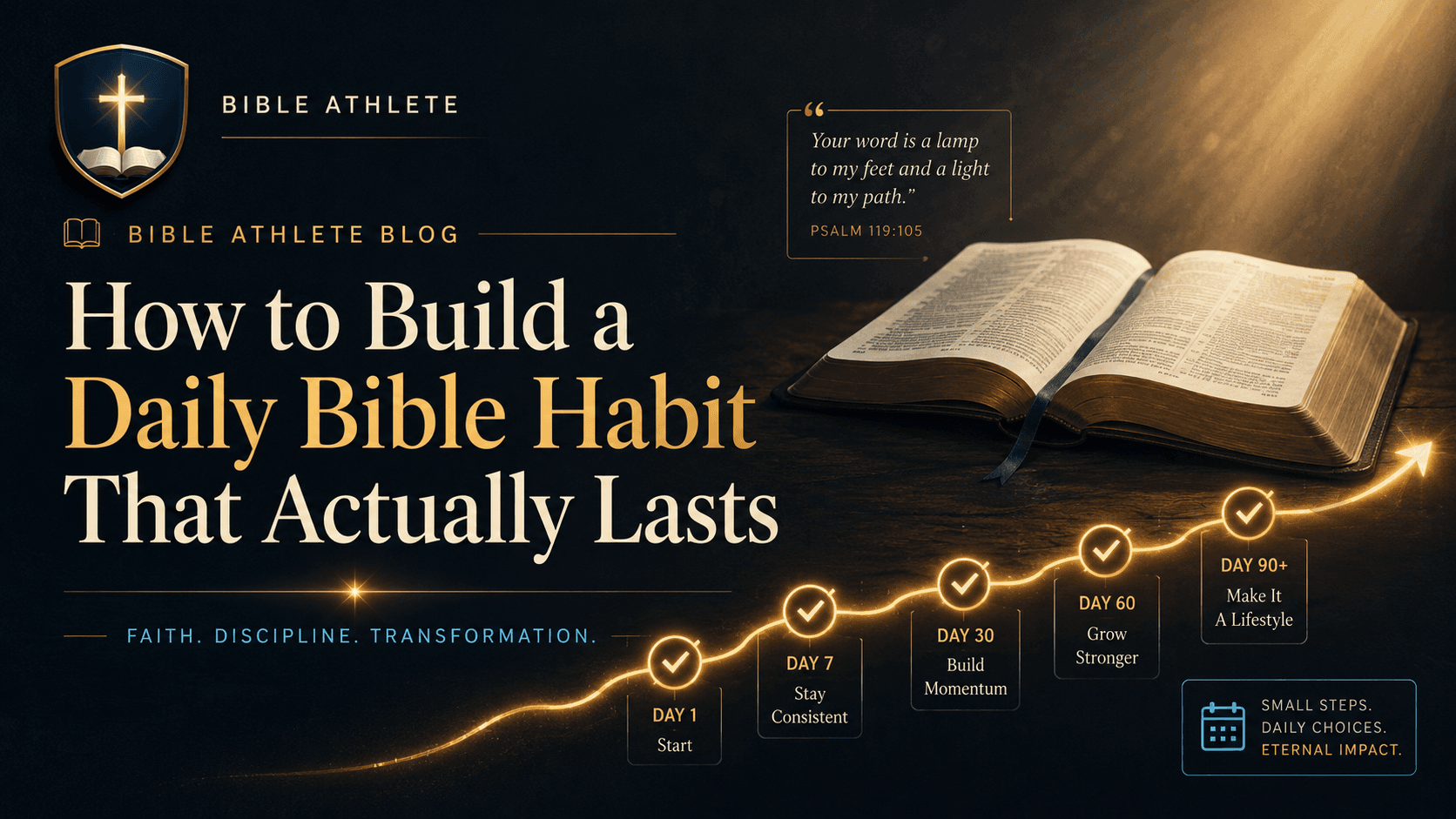
How to Build a Daily Bible Habit That Actually Lasts
A lasting Bible habit is less about a perfect streak and more about a repeatable rhythm you can return to.

Bible Study Habits
7 Simple Ways to Stay Consistent With Bible Study
Consistency grows when your plan is specific, small enough to repeat, and easy to return to after interruptions.

Progress and Motivation
How to Track Your Bible Study Progress and Stay Motivated
Healthy progress tracking helps you see the next faithful action: return, review, keep going, and let visible momentum support the habit.