
Bible Study Habits
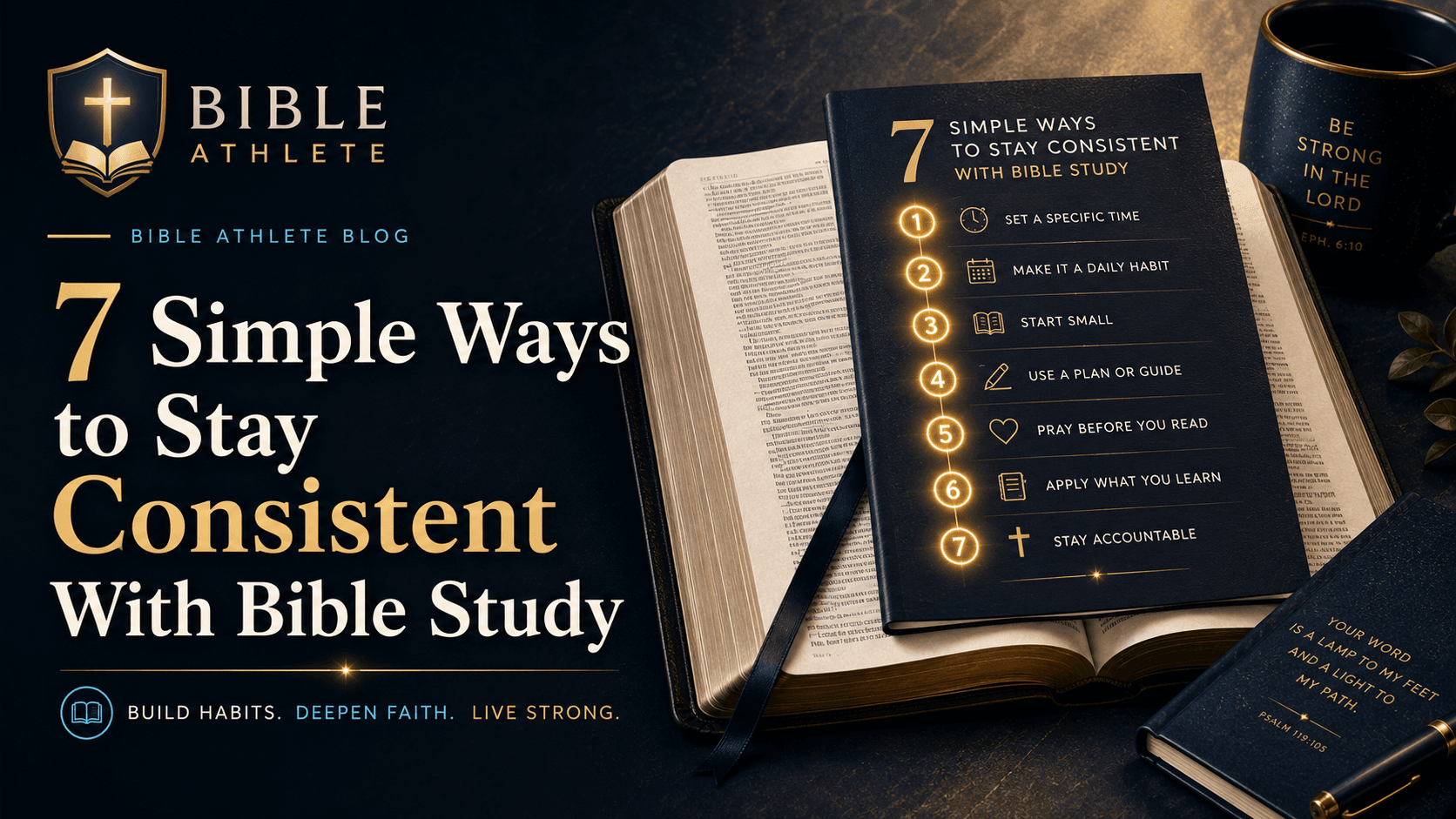
7 Simple Ways to Stay Consistent With Bible Study
Consistency grows when your plan is specific, small enough to repeat, and easy to return to after interruptions.
Consistency is more practical than dramatic
Bible study consistency is often built in ordinary decisions. You make the next session easier to begin, easier to finish, and easier to return to.
These seven methods are intentionally simple. They are not seven versions of “try harder.” They address different parts of the habit: time, place, attention, review, recovery, and encouragement.
Seven simple methods
Choose one or two to practice this week
- 1Attach Bible study to a reliable cueConnect reading to a moment that already happens, such as breakfast, lunch break, or the end of the day.
- 2Set a minimum sessionDecide the smallest faithful version: one paragraph, one story scene, or five focused minutes.
- 3Prepare the next passage before you stopWhen today’s session ends, mark where tomorrow begins so the next start is obvious.
- 4Write one observationA single note can turn reading from passive scanning into active attention.
- 5Ask one recall questionAfter reading, ask what you remember about the people, event, command, or main point.
- 6Plan your restartDecide in advance what you will do after a missed day: return to the next small section without doubling the load.
- 7Track consistency without worshiping the streakUse a checkmark, note, or app progress marker to see momentum, not to shame yourself.
Make attention easier to protect
A consistent habit needs a little protection. Put your phone across the room if it distracts you. Open the passage before opening messages. Use a notebook if writing slows you down in a good way.
You do not have to remove every distraction forever. Just make the next ten minutes easier to give to Scripture.
If a full quiet space is not available, choose one controllable boundary. Put the phone face down, use headphones without audio, or tell your household you need ten minutes before you rejoin the noise.
Small boundaries matter because attention is where consistency becomes meaningful. Repeated sessions with half a mind are less helpful than shorter sessions with honest focus.
Use review to strengthen the rhythm
Review helps a Bible habit feel connected instead of scattered. Before reading today’s section, take thirty seconds to remember yesterday’s main event or idea.
This does not need to become a test of worthiness. It is simply a way to keep the story, teaching, or theme from disappearing as soon as the session ends.
Review also gives tomorrow’s reading a doorway. You are not starting from zero each day; you are reconnecting with what you already noticed.
Keep going without perfectionism
Perfectionism makes one missed day feel like the end. A healthier plan treats missed days as normal and returns quickly.
If you want consistency, make the return path short. Open the next passage. Write one observation. Ask one question. Keep moving.
You can also review your week without accusation. Ask which cue worked, which time of day failed, and what would make the next session easier to begin.
Then adjust one small piece and continue.
Keep training
Related Bible study guides
Bible Study Habits
How to Build a Daily Bible Habit That Actually Lasts
A lasting Bible habit is less about a perfect streak and more about a repeatable rhythm you can return to.
Bible Study Habits
How to Create a Bible Study Routine for Busy Days
A busy day does not need an all-or-nothing Bible study plan. It needs a minimum routine you can actually repeat.

Progress and Motivation
How to Stop Starting and Quitting Bible Reading Plans
If you keep beginning Bible reading plans and losing momentum, the answer may be a smaller plan, a kinder restart, and more active engagement.